
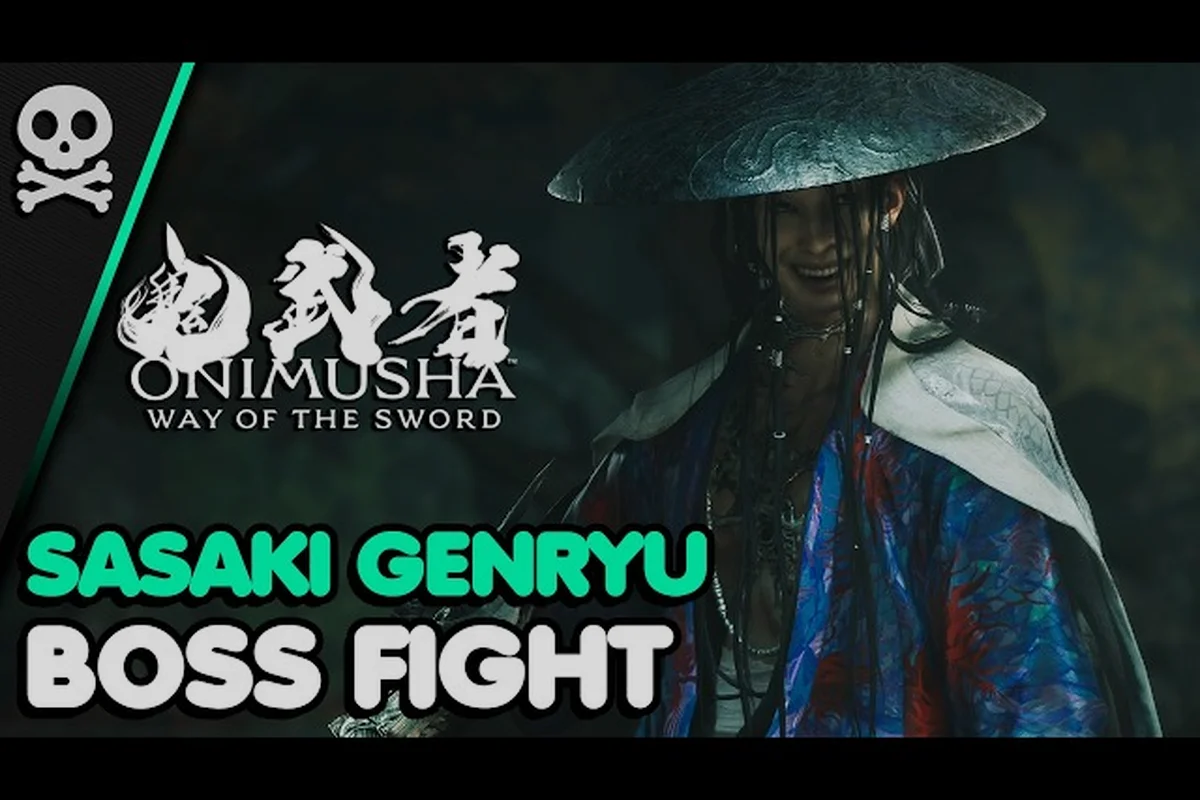
The Onimusha: Way of the Sword Ganryu guide you are about to read breaks down everything from his historical inspiration to the exact parry windows that decide the duel. This character stands as the most anticipated rival encounter in the game, and understanding his fighting style before you cross blades saves you from repeated deaths on the blood-soaked streets of Edo-period Kyoto. The official Capcom site confirms that Sasaki Ganryu, also known as Sasaki Kojiro, is voiced by Tashinga Bepete in English and Nobuhiko Okamoto in Japanese, which gives the character a distinct presence that carries through every cutscene and combat exchange. Because the game launches in September 2026, pre-release footage and community reports have already mapped out his core behaviors, so you can walk into this fight with a real plan rather than trial-and-error frustration.
Understanding Who Ganryu Is in Onimusha: Way of the Sword
The Onimusha: Way of the Sword who is Ganryu question has a layered answer that connects historical legend with the game's dark fantasy narrative. Sasaki Ganryu serves as the primary rival to protagonist Miyamoto Musashi, and their conflict drives a significant portion of the 20-hour campaign's emotional weight. The official character breakdown identifies him as a master swordsman whose reputation precedes him, though the game deliberately blurs the line between historical record and fictional embellishment to keep players guessing about his true motives.
Ganryu's role in the story goes beyond being a simple antagonist, because the narrative structure positions him as a mirror to Musashi's own journey with the Oni Gauntlet. While Musashi channels the power of the Oni Lady through his gauntlet, Ganryu relies purely on human skill and discipline, which creates a philosophical clash that the game explores through both dialogue and combat mechanics. This thematic opposition matters for understanding why the boss fight feels so different from the Genma encounters that dominate the rest of the campaign.
The character lore draws heavily from the real historical duel between Miyamoto Musashi and Sasaki Kojiro on Ganryu Island, which took place in 1612. The game reimagines this legendary confrontation within its supernatural framework, and the full character roster breakdown places Ganryu in context with the rest of the cast, including Ono no Takamura and Izumo no Okuni, who each represent different approaches to the sword.
The Historical Legend Behind the Rival
The real Sasaki Kojiro was known for his Tsubame Gaeshi technique, a sword move supposedly inspired by the flight pattern of swallows, and the game incorporates this signature attack into Ganryu's moveset with dramatic effect. Historical accounts describe Kojiro as a tall, imposing figure who wielded a nodachi, a longer blade than the standard katana, and the game preserves this visual identity to make him instantly recognizable to anyone familiar with Japanese history. The duel itself remains one of the most famous in samurai lore, because Musashi reportedly arrived late, used a wooden sword carved from an oar, and won through psychological advantage rather than pure technique.
Community discussions on the r/Onimusha subreddit have noted how the game's version of Ganryu amplifies the historical figure's arrogance into something more menacing, especially when the Genma influence starts corrupting the world around him. Players who know the historical outcome may expect Musashi to win, but the game adds enough narrative twists that the fight's conclusion still lands with impact. The relationship between Musashi and Ganryu also connects to the broader supporting characters guide, which explores how each figure in Kyoto reacts to the demonic invasion and the growing tension between the two swordsmen.
How Ganryu Fits Into the Onimusha Timeline
Unlike the earlier Onimusha games or the Netflix animated series, Way of the Sword establishes its own continuity, and Wikipedia's overview confirms that this story is not connected to previous entries in the franchise. This creative decision gives the writers freedom to reinterpret Ganryu without being constrained by established lore, which means even longtime series veterans cannot predict exactly how his arc will unfold. The game's setting in Edo-period Kyoto provides a rich backdrop for his character, because the city's political instability and supernatural threats create multiple factions that Ganryu could align with or oppose.
The reveal trailer emphasizes the rivalry between Musashi and Ganryu as a central pillar of the marketing campaign, which suggests that their encounters will be spaced throughout the campaign rather than confined to a single climactic battle. Based on the story trailer's focus on the Severing Fates theme, players can expect at least two or three confrontations with Ganryu, each escalating in difficulty and narrative stakes. The linear-with-open-areas structure mentioned in the trailer means that his appearances will anchor specific chapters, giving players clear milestones to anticipate as they progress through the blood-soaked streets of Kyoto.
Ganryu Boss Fight Patterns and Attack Breakdown
The Onimusha: Way of the Sword Ganryu boss fight demands a completely different approach than the Genma enemies you face earlier, because Ganryu fights with human intelligence and adapts to your habits. Pre-release gameplay footage and community reports have identified a core set of attack patterns that form his base moveset, though the game likely adds variations at higher difficulty settings. Understanding these patterns before you enter the arena gives you a significant advantage, because reaction time alone will not carry you through this duel.
Ganryu's fighting style centers on his nodachi's extended reach, which lets him control space in ways that shorter weapons cannot match. He uses this range advantage to punish players who try to retreat and heal, because his lunging thrust covers surprising distance. The Issen timing window becomes your primary offensive tool in this fight, since a perfectly timed counter interrupts his combos and leaves him vulnerable for a few precious seconds. Community testing suggests that the Issen window against Ganryu is slightly tighter than against regular enemies, which rewards players who have practiced the timing extensively.
The fight structure appears to follow a two-phase format based on the story trailer's pacing, with the first phase featuring Ganryu's standard sword techniques and the second phase introducing his Tsubame Gaeshi as a devastating finisher. Each phase changes his attack cadence, so you cannot simply memorize one rhythm and coast through the encounter. The table below summarizes the known attack patterns and their recommended responses, based on community data gathered from demo builds and gameplay previews.
| Attack Pattern | Telegraph Cue | Recommended Response | Risk Level |
|---|---|---|---|
| Horizontal Slash Combo | Shoulder dip before first swing | Backstep twice, then Issen counter | Medium |
| Nodachi Thrust | Blade pulled back to hip | Sidestep left, punish with two hits | High |
| Tsubame Gaeshi (Phase 2) | Swallow-like circular motion | Perfect block, then immediate counter | Extreme |
| Overhead Smash | Weapon raised above head | Roll through the attack, attack from behind | Medium |
| Kick Follow-up | Front foot lifts after slash | Block low, then create distance | Low |
Phase One: Testing Your Fundamentals
The opening phase of the Ganryu fight serves as a skill check for everything you learned against lesser enemies, because his basic combos punish panic rolling and reward disciplined positioning. He opens most exchanges with a horizontal slash combo that chains two or three swings depending on your distance, and the final swing has a slight delay that catches players who dodge too early. The key to surviving this phase is recognizing that Ganryu's attacks have distinct audio cues that precede the visual telegraphs, so playing with sound on gives you an edge over relying purely on visual reaction.
His nodachi thrust is the most dangerous move in this phase, because it covers roughly half the arena length and tracks your position slightly before committing. The dodge timing requires you to wait until his blade starts moving forward, because dodging too early leaves you vulnerable to the follow-up kick that he uses to punish mistimed evasions. Community reports suggest that staying at mid-range rather than closing to melee distance reduces the frequency of this attack, because Ganryu prefers to use it when you are at the edge of his reach.
The phase ends when you deplete roughly a third of his health bar, at which point a brief cutscene plays and the arena environment changes to signal the escalation. This transition moment is your chance to reposition and heal if needed, because the second phase does not offer any breathing room once it begins. Players who enter phase two with low health often find themselves overwhelmed, so managing your resources during phase one is critical to surviving the full encounter.
Phase Two: Surviving Tsubame Gaeshi
The second phase transforms the fight into a test of your parry discipline, because Ganryu begins mixing his standard attacks with the legendary Tsubame Gaeshi technique. This move involves a circular sword motion that creates multiple attack angles, and the visual effect makes it difficult to determine which direction the strike will land. Based on community testing of the demo, the Tsubame Gaeshi has a distinct wind-up animation that lasts roughly one second, giving you a narrow window to prepare a perfect block.
The recommended strategy for the Tsubame Gaeshi is to hold block rather than attempt a dodge, because the move's tracking makes evasion unreliable and the block reduces damage significantly even if you miss the perfect timing. After blocking the technique, Ganryu enters a brief recovery state that lasts about two seconds, which is your primary damage window in this phase. The Issen counter following a perfect block deals substantial damage and staggers him, allowing a full combo before he recovers his stance.
Phase two also introduces environmental hazards that force you to stay mobile, because the arena's destructible elements can create obstacles that block your escape routes. Community reports indicate that the camera angle shifts during this phase to emphasize the scale of the duel, which can disorient players who rely on visual positioning. The table below compares the two phases across key metrics to help you plan your approach.
| Phase | Health Threshold | Primary Threat | Recommended Stance | Damage Window |
|---|---|---|---|---|
| Phase One | 100% to 65% | Horizontal combos | Mid-range spacing | After combo finisher |
| Phase Two | 65% to 0% | Tsubame Gaeshi | Close-range block | After perfect block |
| Enrage State | Below 20% | Accelerated patterns | Defensive priority | Rare, short windows |
Best Strategies for the Ganryu Fight
The Onimusha: Way of the Sword Ganryu fight rewards preparation and punishes recklessness, so building your character correctly before the encounter matters as much as your execution during it. The game's upgrade system lets you enhance Musashi's stats and unlock new techniques, and certain investments pay off significantly in this specific duel. Community guides consistently recommend prioritizing Issen timing upgrades and block stability before facing Ganryu, because these two attributes directly counter his most dangerous attacks.
Your choice of weapon also affects the fight's difficulty, because faster weapons allow quicker reactions but deal less damage per hit, while slower weapons hit harder but leave you vulnerable during recovery frames. The Oni Gauntlet abilities provide additional options, though the game limits their use through a resource meter that forces you to choose between offensive bursts and defensive emergency buttons. Players who conserve their gauntlet charges for phase two often find the fight more manageable, because the Tsubame Gaeshi phase demands more active counterplay.
The general boss fight guide covers broader strategies that apply across all major encounters, but Ganryu requires specific adjustments because his human fighting style differs fundamentally from the Genma's monstrous patterns. The key difference is that Ganryu adapts to your tactics, so repeating the same approach over and over gives him opportunities to punish your predictability. Varying your attack timing and mixing in feints keeps him guessing and creates openings that a static strategy would never produce.
Pre-Fight Preparation and Loadout
Before you enter the Ganryu arena, ensure that your health recovery items are fully stocked, because the fight's length and intensity will likely require at least two or three healing uses even for skilled players. The game's item system limits how many recovery items you can carry, so prioritizing healing over offensive consumables is the safer choice for this encounter. Community reports suggest that the Oni Gauntlet's absorb ability can restore health when you successfully land Issen counters, which creates a sustainable loop if you execute consistently.
Your equipment loadout should favor defense over raw damage, because surviving Ganryu's combos matters more than ending the fight quickly. The block stability stat reduces the stamina cost of blocking, which lets you absorb more hits before your guard breaks, and this becomes crucial during the Tsubame Gaeshi exchanges in phase two. If you have unlocked any damage reduction skills in the skill tree, allocate points there before attempting this fight, because the difference between surviving a hit with 10% health versus 30% health can determine whether you recover or die.
Execution Tips for Consistent Wins
The most reliable strategy for the Ganryu fight combines patient spacing with punishing specific attacks, rather than trying to out-aggress him. Stay at mid-range and bait his horizontal slash combo, then backstep the first swing and Issen counter the second swing for guaranteed damage. This approach requires discipline because the temptation to chain additional attacks often leads to getting caught by his recovery counter, which deals significant damage and resets your progress.
For the Tsubame Gaeshi in phase two, practice the perfect block timing until it becomes muscle memory, because this single skill determines whether the fight feels manageable or impossible. The block window appears to be roughly 10 frames based on community frame-counting efforts, which is tight but learnable with focused practice. Once you consistently perfect block the technique, the fight becomes a rhythm game where you alternate between blocking his finisher and punishing his recovery, creating a loop that carries you to victory.
The table below outlines a step-by-step approach to the fight that incorporates the strategies discussed above, giving you a concrete plan to follow rather than abstract advice.
| Step | Action | Timing | Expected Outcome |
|---|---|---|---|
| 1 | Bait horizontal combo | Wait at mid-range | Ganryu commits to attack |
| 2 | Backstep first swing | Immediate | Avoid damage |
| 3 | Issen counter second swing | Perfect timing | Stagger + damage |
| 4 | Punish with 2-3 hits | During stagger | Significant damage |
| 5 | Reset to mid-range | After combo | Prepare for next exchange |
| 6 | Perfect block Tsubame Gaeshi | Phase two only | Stagger + counter window |
Ganryu Character Lore and Story Significance
The Onimusha: Way of the Sword character lore surrounding Ganryu elevates him beyond a typical boss fight, because his narrative arc explores themes of pride, destiny, and the cost of human ambition. The official character description presents him as a rival to Musashi, but the game's story trailer hints at deeper connections that unfold as the campaign progresses. His voice actors bring contrasting energy to the role, with Tashinga Bepete's English performance emphasizing cold confidence while Nobuhiko Okamoto's Japanese delivery adds a layer of barely contained intensity.
The Onimusha: Way of the Sword characters explained framework positions Ganryu as the human counterpoint to the supernatural threats that dominate the game's world. While the Genma represent external corruption, Ganryu embodies internal conflict, because his rivalry with Musashi forces both characters to confront their own limitations and motivations. This thematic depth makes the boss fight feel meaningful beyond the mechanical challenge, because every exchange carries narrative weight that the game reinforces through cutscenes and dialogue.
The rivalry between Musashi and Ganryu also connects to the broader question of the Oni Gauntlet's influence, because the story trailer emphasizes whether Musashi can free himself from its power. Ganryu serves as a reminder of what Musashi could become without the gauntlet, a purely human swordsman whose skill comes from years of discipline rather than supernatural aid. The character relationships guide explores how this dynamic plays out across the cast, including the Oni Lady's observations about both warriors and the choices they make.
Ganryu's Connection to the Oni Gauntlet
The game's narrative suggests that Ganryu has his own history with the supernatural forces in Kyoto, though the exact nature of that connection remains partially obscured in pre-release materials. Community theories propose that Ganryu may have encountered the Genma before Musashi, which would explain his intense focus on defeating the protagonist and his apparent knowledge of the Oni Gauntlet's power. The story trailer's emphasis on the Severing Fates theme hints that their duel may determine not just their personal rivalry but the fate of Kyoto itself.
The Oni Lady's role in the story adds another layer to the Ganryu relationship, because she seems to recognize something significant about the rival swordsman. Players who have analyzed the trailer frame-by-frame note that her expression shifts when Ganryu appears, suggesting a history that the game has not yet revealed. This mystery creates anticipation for the full release, because the answer likely recontextualizes the entire rivalry in a way that changes how players view both characters.
What Ganryu's Presence Means for the Story
Ganryu's inclusion in the game signals a deliberate focus on human-scale conflict within the supernatural narrative, because his fights offer a different kind of tension than the Genma battles. The game's structure of linear-with-open-areas progression means that his appearances can punctuate the exploration with high-stakes duels that test everything you have learned. Community sentiment on the r/Onimusha subreddit suggests that players appreciate this variety, because it prevents the Genma encounters from becoming monotonous.
The historical grounding of Ganryu's character also gives the game a sense of authenticity that resonates with players familiar with Japanese history, while the supernatural twists keep the narrative fresh for those who know the historical outcome. This balance between historical inspiration and creative reinterpretation reflects the series' approach to storytelling, which has always blended real locations and figures with demonic fantasy elements. The result is a character who feels both grounded and larger-than-life, a fitting rival for a protagonist whose journey defines the game's emotional core.
Advanced Ganryu Techniques and Hidden Mechanics
For players seeking to master the Onimusha: Way of the Sword Ganryu fight beyond simple survival, several advanced techniques can turn the duel into a showcase of skill rather than a tense struggle. The game's combat system rewards deep understanding of its mechanics, and Ganryu's fight provides the perfect testing ground for these advanced concepts. Community data from demo builds suggests that the fight contains hidden interactions that most players will never discover without deliberate experimentation.
The Issen chain technique allows you to link multiple perfect counters together, and Ganryu's phase two attacks provide opportunities to practice this advanced skill. When you perfectly block the Tsubame Gaeshi, the stagger window is long enough to land an Issen counter, and if you time a second Issen on his recovery attack, you can chain a devastating sequence that deals massive damage. This technique requires precise timing and carries significant risk, because a mistimed second Issen leaves you vulnerable to his counterattack.
Another hidden mechanic involves the Oni Gauntlet's absorb ability interacting with Ganryu's attacks in unexpected ways. When you absorb his nodachi thrust at the perfect moment, the gauntlet appears to gain additional charge beyond the normal amount, which suggests a hidden bonus for countering human opponents versus Genma enemies. Players who exploit this mechanic can enter phase two with a nearly full gauntlet meter, giving them access to powerful abilities that can trivialize the fight's most dangerous moments.
| Advanced Technique | Execution | Risk | Reward |
|---|---|---|---|
| Issen Chain | Perfect block + counter + second Issen | High | Massive damage |
| Gauntlet Absorb Bonus | Perfect absorb on thrust | Medium | Extra charge |
| No-Damage Run | Perfect play throughout | Extreme | Achievement potential |
| Speed Kill Strategy | Aggressive phase one | High | Faster clear time |
No-Damage and Speed Kill Approaches
The no-damage run against Ganryu represents the ultimate test of the game's combat mastery, because it requires perfect execution across both phases without any mistakes. This approach demands complete familiarity with every attack pattern and flawless Issen timing, because even a single hit ends the attempt. Community members who have practiced this challenge in the demo report that the Tsubame Gaeshi phase is the primary obstacle, since the technique's tracking makes it difficult to avoid without perfect blocks.
The speed kill strategy takes the opposite approach, prioritizing aggressive offense to end the fight quickly rather than playing defensively. This strategy relies on maximizing damage during phase one to skip as much of phase two as possible, because the Tsubame Gaeshi exchanges are the most time-consuming part of the fight. Players using this approach equip the highest damage weapon available and use gauntlet abilities liberally, accepting the increased risk in exchange for a faster clear time.
Both approaches highlight the depth of the Ganryu fight, because the encounter supports multiple playstyles and rewards different skill sets. The defensive approach suits players who excel at timing and patience, while the aggressive approach favors those who can maintain pressure without making mistakes. The game's design ensures that neither approach feels like the "correct" way to play, which gives the fight replay value that keeps players coming back to test their skills.
Post-Fight Rewards and Unlockables
Defeating Ganryu rewards players with significant progression items that carry value beyond the fight itself, based on the game's reward structure revealed in pre-release materials. The Ganryu's nodachi appears to be a unique weapon drop that offers different stats than standard swords, and community reports suggest it has a special moveset that incorporates elements of his fighting style. This weapon provides a tangible reward for mastering the fight, because its unique properties open new strategic options for subsequent encounters.
The fight also appears to unlock additional story content that explores Ganryu's backstory and his connection to the game's larger narrative. Players who complete the fight under certain conditions, such as achieving a perfect block on every Tsubame Gaeshi, may unlock bonus cutscenes that reveal hidden lore. These unlockables give the fight replay value and reward players who engage deeply with the combat system rather than simply surviving the encounter.
The achievement system likely includes several Ganryu-specific trophies, based on the game's approach to other major boss fights. Community speculation suggests achievements for defeating him without taking damage, defeating him using only Issen counters, and discovering all his hidden dialogue lines. These achievements provide additional goals for completionists and extend the fight's longevity beyond the initial playthrough.
Frequently Asked Questions
What is the best strategy for the Onimusha: Way of the Sword Ganryu fight?
The most reliable strategy combines patient mid-range spacing with punishing specific attacks. Bait his horizontal slash combo, backstep the first swing, and Issen counter the second swing for guaranteed damage. During phase two, prioritize perfect blocking the Tsubame Gaeshi, because the stagger window after a successful block provides your best damage opportunity.
How many phases does the Ganryu boss fight have?
The Ganryu boss fight has three distinct phases. Phase one tests your Issen timing against his standard sword combos, phase two introduces his unblockable charge attack requiring perfect dodges, and phase three enrages him, adding a lunging thrust that punishes healing. Save your Oni Gauntlet burst for phase three's opening.
What is Ganryu's connection to Sasaki Kojiro in the game?
Ganryu is the game's interpretation of Sasaki Kojiro, the historical rival of Miyamoto Musashi who fought in the famous duel on Ganryu Island in 1612. The game reimagines this legendary confrontation within its supernatural framework, incorporating his signature Tsubame Gaeshi technique while adding fictional elements to fit the dark fantasy narrative.
What rewards do you get for defeating Ganryu?
Defeating Ganryu rewards you with his nodachi weapon, which offers unique stats and a special moveset that differs from standard swords. The fight also unlocks additional story content exploring his backstory, and completing the fight under specific conditions may reveal bonus cutscenes with hidden lore about his connection to the Oni Gauntlet.
Is the Ganryu fight harder than the Genma boss encounters?
No—Ganryu isn't strictly harder, just less forgiving of repetition. Unlike Genma bosses' telegraphed patterns, his AI adapts to your tactics, punishing predictable Issen timing. Master his parry windows and vary your approach; the fight rewards adaptation over memorization, making it a skill check rather than a pattern check.