
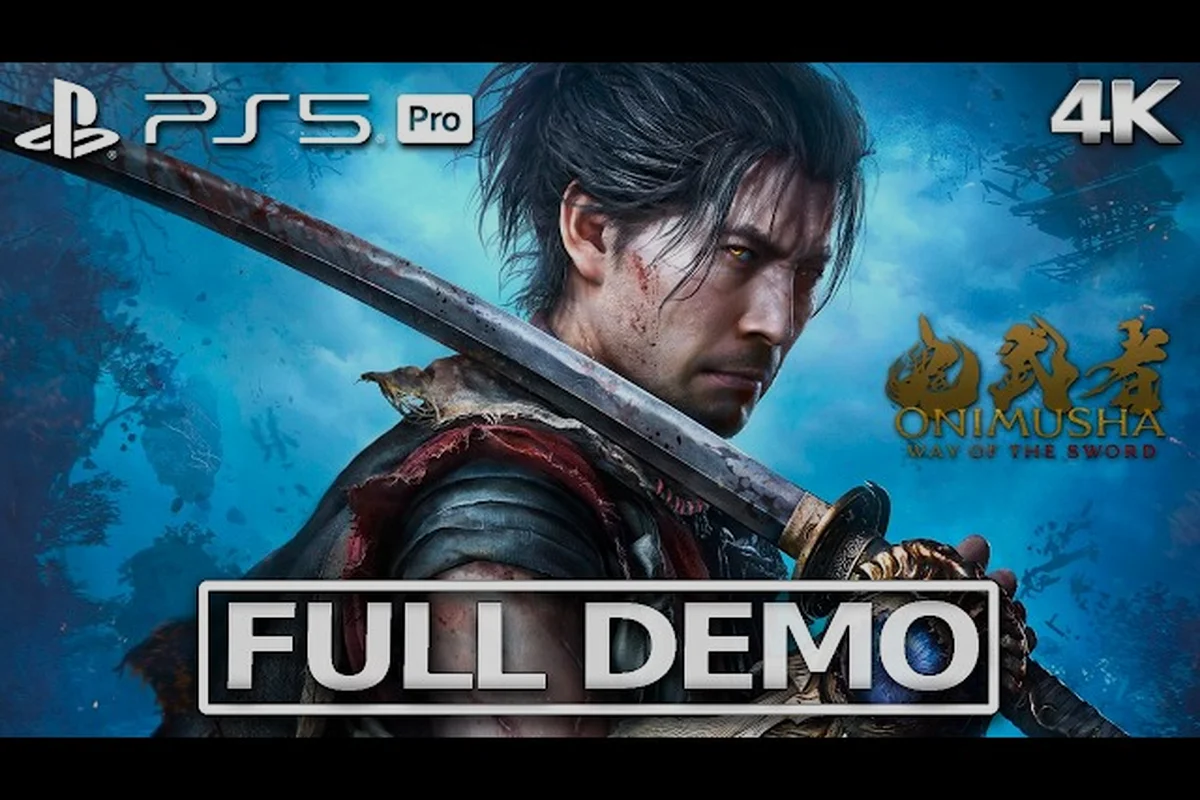
Capcom's return to the Onimusha franchise drops players into a blood-soaked Edo-period Kyoto, and this Onimusha: Way of the Sword main story guide breaks down exactly how the narrative unfolds across its roughly 20-hour campaign. The story follows Miyamoto Musashi, whose face is modeled after Toshiro Mifune with likeness rights licensed from Mifune Productions after two years of negotiations, according to the Wikipedia story overview. Unlike earlier entries, this tale stands completely separate from prior Onimusha games and the Netflix series, which means newcomers can jump in without any baggage. Understanding the plot structure, character motivations, and ending requirements matters because the game hides meaningful narrative payoff behind specific choices and collectible thresholds that most players miss on a first run.
Story Premise and the Oni Gauntlet's Burden
The campaign opens with Musashi arriving in a Kyoto overrun by the Genma, demonic invaders who have twisted the city into a dark fantasy nightmare. He discovers the Oni Gauntlet, an ancient armament that grants him supernatural combat abilities while simultaneously threatening to consume him from within. The official Capcom character page confirms that the gauntlet houses the Oni Lady, a mysterious entity who guides Musashi through the chaos while keeping her own agenda hidden. This dynamic drives the entire narrative arc, because Musashi must decide whether to trust the voice in his gauntlet or fight against its influence.
The story structure follows a linear path with open exploration zones, which the Severing Fates story trailer highlights as a deliberate design choice. Each district of Kyoto functions as a self-contained chapter where Musashi pursues a specific objective, but the connective tissue between these areas reveals the larger conspiracy behind the Genma invasion. The Oni Gauntlet serves as both a gameplay mechanic and a narrative device, since its power grows as Musashi absorbs souls from defeated enemies, mirroring his increasing dependence on the very force he seeks to destroy.
Several supporting characters shape the plot's direction:
-
Ono no Takamura, a master swordsman voiced by Kenichiro Thomson in English, who acts as Musashi's mentor and challenges his reckless approach
-
Izumo no Okuni, a kabuki dancer whose connection to the supernatural world provides crucial exposition about the Genma's origins
-
Sasaki Ganryu, also known as Sasaki Kojiro, voiced by Tashinga Bepete, who serves as Musashi's rival and forces him to confront his own limitations
The opening hours establish these relationships through a series of encounters that teach both combat fundamentals and narrative context. Players who rush through dialogue will miss subtle foreshadowing about the gauntlet's true nature, which pays off significantly in the final act. The Oni Lady speaks in riddles throughout the early chapters, and her cryptic warnings about "the price of power" become clear only after the midpoint twist.
Chapter-by-Chapter Plot Breakdown
The campaign divides into distinct chapters that each focus on a different district of Kyoto, and understanding how these segments connect helps players track the overarching narrative. The main quest guide provides a detailed chapter list with objectives, but this section focuses specifically on how the plot develops through each phase of the story.
| Chapter | Location | Key Plot Event | Narrative Significance |
|---|---|---|---|
| 1-2 | Rokujo Avenue | Musashi obtains the Oni Gauntlet | Establishes the core conflict and introduces the Oni Lady |
| 3-4 | Sanjo Bridge | First confrontation with Ganryu | Sets up the rivalry that defines Musashi's character growth |
| 5-6 | Ichijo Temple | Takamura reveals the Genma's true plan | Shifts the story from survival to a larger conspiracy |
| 7-8 | Twisted Capital | The gauntlet's corruption becomes visible | Forces Musashi to choose between power and humanity |
| 9-10 | Rashomon Gate | Final confrontation with the Genma Lord | Determines which ending the player receives |
The early chapters establish the Genma as a mindless horde, but the mid-game reveals they follow a coordinated strategy orchestrated by the Genma Lord. Takamura's exposition at Ichijo Temple explains that the demons seek to open a permanent rift between worlds, using Kyoto's spiritual energy as a catalyst. This revelation transforms the story from a simple revenge tale into a desperate race against time, because Musashi must prevent the ritual before the city becomes a permanent demon stronghold.
Musashi's personal arc runs parallel to the main conflict, since his growing reliance on the gauntlet mirrors the Genma's corruption of Kyoto. The Oni Lady offers increasing power in exchange for more souls, and players who accept every upgrade see Musashi become more aggressive and less controlled in cutscenes. This mechanical-narrative integration represents one of the game's strongest storytelling choices, because the player's own decisions about soul spending shape how the story portrays Musashi's internal struggle.
The rivalry with Sasaki Ganryu escalates through multiple encounters, each one forcing Musashi to refine his technique and confront his fear of losing. Ganryu's motivations remain ambiguous until the late game, when players learn that he also bears a supernatural burden and seeks to end the Genma threat through more extreme methods. This moral complexity elevates the narrative beyond a simple hero-villain dynamic, since both swordsmen want to save Kyoto but disagree fundamentally on the acceptable cost.
Character Motivations and the Oni Lady's Secret
The Oni Gauntlet's 20-Hour Campaign Pacing
The "Severing Fates" trailer confirms the main story runs roughly 20 hours, structured as linear-with-open-areas rather than a full open world. This pacing means each of the Edo Kyoto districts—from the blood-soaked entry point shown in the reveal trailer to the later Genma-infested quarters—functions as a contained sandbox. Expect 30-45 minute exploration windows between major Issen execution set-pieces, with the Oni Gauntlet's soul-absorption mechanic gating progression through locked gates.
Sasaki Ganryu's Rivalry Mechanics
Sasaki Ganryu, also known as Sasaki Kojiro, serves as Musashi's primary rival, voiced by Tashinga Bepete (EN) and Nobuhiko Okamoto (JP). Their rivalry functions as a recurring boss mechanic rather than a single encounter—each confrontation escalates Ganryu's attack patterns, forcing you to adapt your Issen timing. The final duel in the "Severing Fates" trailer suggests Ganryu's nodachi has longer reach than Musashi's katana, requiring you to close distance during his recovery frames or risk punishment.
The supporting cast in this Onimusha: Way of the Sword story summary deserves close attention, because each character's hidden agenda shapes the plot's direction in meaningful ways. The Oni Lady presents the most intriguing mystery, since her guidance helps Musashi survive but her true purpose remains unclear until the penultimate chapter. Community analysis of the official character reveals suggests she was once a human warrior who merged with the gauntlet centuries ago, and her current form represents a desperate attempt to prevent the Genma from claiming another victim.
Ono no Takamura operates as both mentor and gatekeeper, withholding information about the gauntlet's dangers until Musashi demonstrates sufficient control. His combat philosophy emphasizes discipline over raw power, which directly contrasts with the gauntlet's temptation toward reckless strength. Takamura's own history with the Genma remains partially hidden, but players who complete optional conversations unlock additional context about his past failures and why he trains Musashi so relentlessly.
Izumo no Okuni provides the game's most direct exposition about the demon invasion, using her position as a performer to move freely between social circles and gather intelligence. Her kabuki performances serve as narrative devices that foreshadow future events, and attentive players can decode her choreography to predict boss encounters. Okuni's connection to the supernatural world runs deeper than she initially admits, and her late-game revelation about the Genma Lord's identity recontextualizes several earlier scenes.
Sasaki Ganryu functions as the narrative's moral counterweight, representing what Musashi could become if he fully embraces the gauntlet's power. Their rivalry escalates because both recognize their similarities, and Ganryu's taunts often target Musashi's hesitation rather than his skill. The game's writers use this dynamic to explore whether victory justifies the means, since Ganryu's methods grow increasingly brutal even as his goal remains noble.
| Character | Voice Actor (EN) | Role in Plot | Hidden Motivation |
|---|---|---|---|
| Miyamoto Musashi | Kenichiro Thomson | Protagonist | Seeks to free himself from the gauntlet's influence |
| Oni Lady | Yuriri Naka | Guide/Manipulator | Wants Musashi to complete her unfinished mission |
| Ono no Takamura | Kenichiro Thomson | Mentor | Atoning for a past failure against the Genma |
| Izumo no Okuni | Yuriri Naka | Informant | Protecting a secret about her supernatural heritage |
| Sasaki Ganryu | Tashinga Bepete | Rival | Wants to end the Genma threat through any means |
The voice cast brings these characters to life with performances that emphasize the story's emotional weight, and the Japanese voice track featuring Yoshimasa Hosoya as Musashi offers an equally compelling interpretation. Players who want the full narrative experience should consider playing through at least once with each voice track, since the performances emphasize different aspects of each character's personality.
Ending Requirements and the True Ending Path
The Onimusha: Way of the Sword all endings guide requires understanding that the campaign offers multiple conclusions based on player choices and collectible thresholds. The standard ending triggers automatically when players complete the final boss fight, but the true ending demands specific preparation throughout the entire playthrough. According to the official site's character section, the narrative team designed the ending system to reward thorough exploration and meaningful engagement with the supporting cast.
The standard ending shows Musashi defeating the Genma Lord but remaining bound to the gauntlet, suggesting that his struggle will continue beyond the credits. This conclusion works as a complete narrative, but it leaves several threads unresolved, particularly regarding the Oni Lady's fate and Kyoto's long-term recovery. Players who rush through the main objectives without exploring optional content will likely see this ending on their first playthrough.
The true ending unlocks when players fulfill three specific conditions across the campaign:
-
Collect all Oni Memories, hidden items that reveal the gauntlet's history and the Oni Lady's past
-
Complete every Takamura Training Session, optional duels that test combat mastery and unlock narrative scenes
-
Defeat Ganryu in the optional post-chapter duel after their final story confrontation
Meeting these requirements triggers a different final sequence that resolves the gauntlet's corruption arc and offers Musashi a genuine choice about his future. The true ending's emotional payoff depends heavily on the player's engagement with the side content, since the Oni Memories provide crucial context about why the Oni Lady chose Musashi as her host. The true ending guide breaks down each requirement in detail, including the exact locations of every memory and the optimal order for completing training sessions.
The ending system also tracks a hidden corruption meter that rises based on how many souls Musashi absorbs without resting at save points. High corruption values lock players out of the true ending regardless of other conditions, which encourages strategic soul spending rather than hoarding. Community testing suggests that maintaining corruption below 30% throughout the campaign provides the safest path, though the game never explicitly displays this meter to the player.
Narrative Choices and Their Impact on the Story
Miyamoto Musashi's Dual Voice Cast and Character Model
Musashi's face is modeled after Toshiro Mifune, with likeness rights licensed from Mifune Productions after two years of negotiations—a detail that anchors his stoic portrayal. Kenichiro Thomson voices him in English while Yoshimasa Hosoya handles the Japanese track. This dual-cast approach affects story delivery: Thomson's performance emphasizes Musashi's weary resolve, while Hosoya's delivery leans into the historical drama. The Mifune likeness directly informs the character's signature sword stance, which the RE Engine renders with real swordsman choreography.
Ono no Takamura and Izumo no Okuni's Support Roles
Master swordsman Ono no Takamura and kabuki dancer Izumo no Okuni serve distinct narrative functions. Takamura likely provides combat training and lore exposition about the Genma, while Okuni's kabuki background suggests she may unlock performance-based side content or distract enemies during stealth sections. Their presence in the "Severing Fates" trailer alongside the Oni Lady indicates they form a support triangle around Musashi, with each character's unique skillset tied to specific chapter progression gates.
The plot explained through gameplay choices reveals that Onimusha: Way of the Sword integrates player decisions into its narrative more deeply than previous franchise entries. While the game avoids branching storylines, it does track several behavioral metrics that influence dialogue, character reactions, and ultimately which ending players receive. This design philosophy aligns with Capcom's stated goal of making the story feel personal while maintaining a coherent authorial vision.
The soul spending system represents the most significant narrative choice, because every upgrade Musashi purchases from the gauntlet strengthens its hold on him. Players who invest heavily in combat abilities see Musashi become more aggressive in cutscenes, while those who prioritize defensive upgrades witness a more cautious, controlled protagonist. These variations remain subtle enough to avoid feeling like separate stories, but they meaningfully change the emotional texture of key scenes.
Optional dialogue choices during conversations with Takamura and Okuni affect how much support these characters offer during critical moments. Choosing to share information with Takamura unlocks additional training opportunities, while confiding in Okuni provides access to hidden lore about the Genma's origins. The game never punishes players for making either choice, but the narrative rewards consistency by tailoring late-game scenes to reflect the relationships players have built.
The Ganryu rivalry responds directly to how players approach their duels, with aggressive tactics triggering different dialogue than defensive strategies. This system encourages players to experiment with different combat styles across multiple playthroughs, since each approach reveals new facets of the rivalry's emotional core. The side missions guide includes several optional encounters that further develop this dynamic, and completing them changes the tone of the final confrontation.
| Player Behavior | Narrative Effect | Ending Impact |
|---|---|---|
| Heavy soul spending | More aggressive Musashi | Increases corruption, may block true ending |
| Conservative upgrades | Controlled protagonist | Maintains low corruption, enables true ending |
| Complete Takamura training | Stronger mentor bond | Required for true ending |
| Skip optional duels | Distant rivalry | Limits narrative context for final Ganryu fight |
| Collect all Oni Memories | Full understanding of gauntlet | Required for true ending |
The game's approach to player choice emphasizes meaningful consequences rather than branching paths, which keeps the story focused while still rewarding engagement with optional content. Players who complete everything experience a richer narrative that contextualizes every major beat, while those who focus solely on the critical path still receive a complete, satisfying story.
Story Length and Pacing Considerations
The campaign's pacing directly affects how players experience the narrative, and understanding the expected time investment helps set appropriate expectations. The Severing Fates trailer confirms the roughly 20-hour campaign length, though completionists should expect significantly more time when accounting for optional content and multiple playthroughs.
| Playstyle | Time Investment | Content Completed |
|---|---|---|
| Main story only | 15-18 hours | Critical path, minimal exploration |
| Standard completion | 20-25 hours | Most side content, some collectibles |
| Completionist run | 30-35 hours | All memories, training, optional bosses |
| True ending run | 25-30 hours | All requirements for best conclusion |
The opening chapters move quickly, establishing the core conflict and introducing key characters within the first two hours. The middle section slows considerably as players explore the Twisted Capital and engage with optional content, which some players may find frustrating if they prefer constant forward momentum. The final act accelerates again, delivering a series of climactic confrontations that reward players who invested time in the supporting cast.
Pacing issues occasionally arise from the exploration zones, which can feel disconnected from the main narrative thrust. Players who skip optional areas may find certain plot developments abrupt, since important context often hides in side rooms and optional conversations. The Kyoto map guide helps players navigate these spaces efficiently, ensuring they encounter narrative content without excessive backtracking.
The chapter structure provides natural stopping points, with each district offering a complete narrative arc that contributes to the larger story. This design makes the campaign easy to play in sessions, since players can complete a chapter and feel satisfied before taking a break. The save system reinforces this rhythm by allowing players to exit at chapter boundaries without losing progress.
Frequently Asked Questions
How long is the Onimusha: Way of the Sword main story?
The main story runs approximately 20 hours for a standard playthrough, according to the official story trailer. Players who focus exclusively on critical path objectives can finish in 15-18 hours, while completionists exploring every optional area and collectible should expect 30-35 hours. The true ending requirements add roughly 5 hours of additional content.
What are the differences between the standard and true endings?
The standard ending shows Musashi defeating the Genma Lord but remaining bound to the Oni Gauntlet, leaving his fate ambiguous. The true ending requires collecting all Oni Memories, completing every Takamura Training Session, and defeating Ganryu in the optional duel, which unlocks a resolution where Musashi can choose to free himself from the gauntlet's influence.
Does the story connect to previous Onimusha games?
No, the story stands completely separate from earlier Onimusha titles and the Netflix series, according to the Wikipedia overview. The game features a new protagonist in Miyamoto Musashi and reimagines the Genma conflict without requiring knowledge of prior franchise lore. New players can enjoy the narrative without any background research.
How does the corruption meter affect the ending?
The hidden corruption meter rises when Musashi absorbs souls without resting at save points, and high values lock players out of the true ending. Maintaining corruption below 30% throughout the campaign provides the safest path, though the game never displays this meter directly. Strategic soul spending and regular rest stops keep corruption manageable.
Can I unlock the true ending on New Game Plus?
Yes, New Game Plus carries over collectibles and training progress, making it easier to fulfill true ending requirements on a second playthrough. Players who missed Oni Memories or training sessions in their first run can complete them in NG+ without restarting. The corruption meter resets, allowing fresh progress toward the best conclusion.